Katy Lucas
The Artist
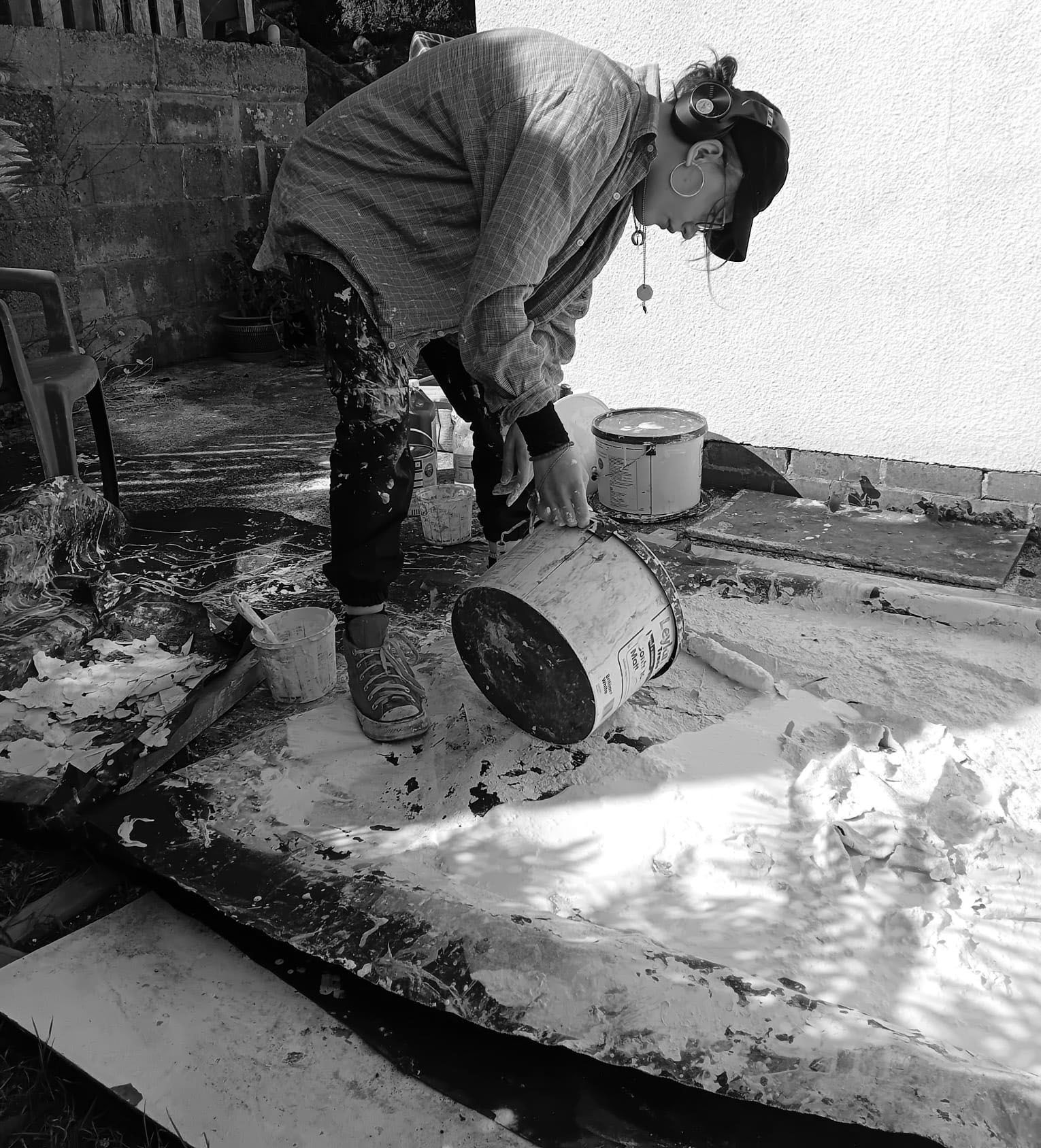
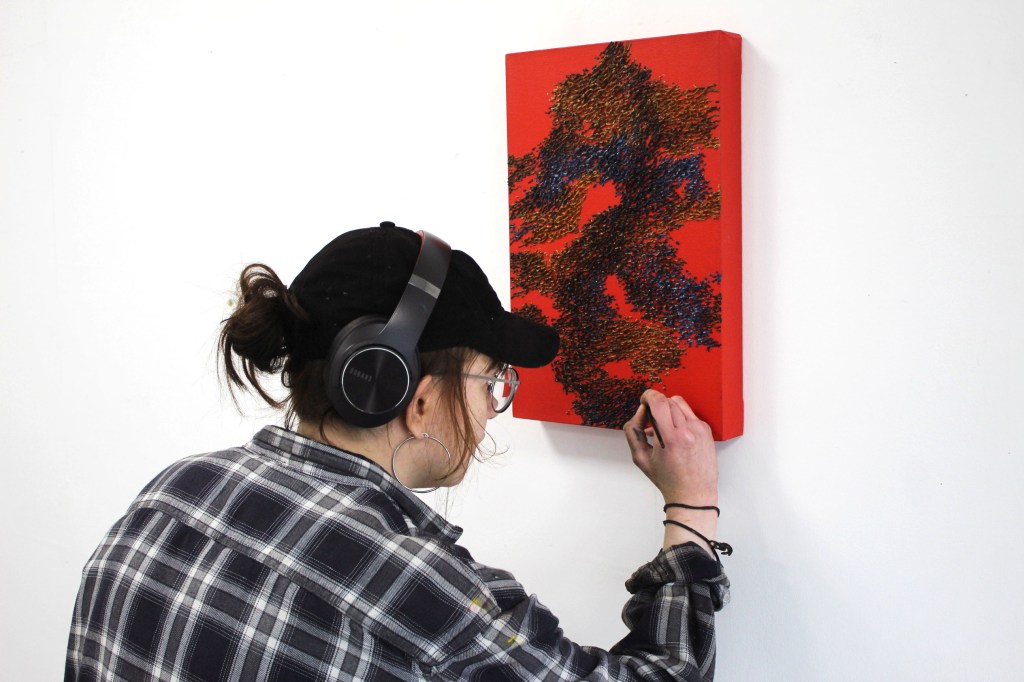
Artist Bio
Katy Lucas (b. 2003 Steeton, UK) studied BA (Hons) Fine Art: Painting & Drawing at the University of Northampton, Northamptonshire (2022 – 2025), Foundation Diploma: Art & Design at Leeds Art University, West Yorkshire (2021 – 2022). Group exhibitions include: Degree Show 2025, Trinity Buoy Wharf Drawing Prize 2024, Working Category (2024 – 2025), Drawing exhibition at the Arctic Circle (2024 – 2025), Tŷ Pawb Open 2024 (2024 – 2025), The Sea Washes Away All the Ills of Man (2023). Residency: The Sea Washes Away All the Ills of Man (2023). She currently lives and studies in Northampton.
CV
Education
2022 – 2025
BA (Hons) Fine Art Painting and Drawing
University of Northampton, Northamptonshire
2021 – 2022
Foundation Diploma in Art and Design
Leeds Arts University, West Yorkshire
Select Exhibitions
2025
Shortlisted/Exhibition Catalogue ArtEvol: Voices from the Undefined 2025
London Art Collective & Saatchi Gallery
2025
Degree Show
BA (Hons) Fine Art: Painting & Drawing
University of Northampton
2025
Rising from the Sea
St Catherine Island and Fort, Tenby
Organised By Natasha Toms / Georgia Watkins
2024 – 2025
Trinity Buoy Wharf Drawing Prize, Working Category
London – Trinity Buoy Wharf / Sailsbury – Sailsbury Museum / Falmouth – Falmouth Art Gallery / Dundee – Drawing Projects UK / Manchester – Waterside
Selected By Benjamin Derbyshire / Andrew Grant / Caroline Grewar
2024 – 2025
Drawing Exhibition at the Artic Circle 2024
Galleria Napa, Lapland
Selected By Aira Huovinen / Aku Winter / Anna Pyhtilä / Elisa Alaluusua / Jenny Wright / Kaisu Pitko / Miia Mattila / Rebekka Hein
2024 – 2025
Tŷ Pawb Open 2024
Tŷ Pawb, Wrexham
Selected By Alan Dunn
2023 – 2024
The Sea Washes Away All the Ills of Men, Artist Residency
St Catherine Island and Fort, Tenby
Selected By Natasha Toms / Georgia Watkins
Publications
2024
Trinity Buoy Wharf Drawing Prize, Exhibition Catalogue
Residencies
2023 – 2024
The Sea Washes Away All the Ills of Men, Artist Residency
St Catherine Island and Fort, Tenby
Selected By Natasha Toms / Georgia Watkins
Statement
My practice is informed by the experience of caving. I examine landscape as a subject through contemporary painting and drawing by engaging with enquiries into its inner structures and material forms. My work is led directly by personal experiences of entering and engaging with subterranean landscape. Caving exemplifies this through both literal and non-physical exchanges with the stratigraphy and surfaces that form the northern English landscape, where I question and re-examine my locality and topographical familiarity. My studio work extends from the cave, re-experiencing and translating the layered, immersive bodily encounters with material time through haptic contact with the subterranean landscape.
The works of contemporary painter Simon Callery and contemporary drawer Stefan Gant, who collaborate with field archaeology, offer a transferable language between working in and within the landscape and an artistic practice. My work does not necessarily depict the landscape itself but rather the material processes in the cave that led to the formations and features that I find so fascinating.
How and why my practice has developed is because of my time in caves. The experience of being in the dark, wading through cold water off the Yorkshire moors guided only by a torch, camera in hand is a profoundly intimate way to engage directly with the landscape. Caving offered an opportunity to re-examine the northern landscape, not just surface topography but also inner interfaces, questioning human relationships with sites containing ‘deep’ time. My work is more relational to physical and structural geology. Ideas of erosion, cementation, sedimentation and speleothem – like stalactites and stalagmites, which are formed by water “dripping, seeping, or splashing” – are key.
Painting is integral. My paintings are almost sedimentary in their construction and mimic painterly secretions, akin to chemical weathering processes and secreted deposits within cave systems. All my work contains the time in the cave and the ‘deep’ material time which is established through the build-up of marks over time.
 Katy Lucas